
Spiraling thoughts worksheet
A spiraling thoughts worksheet gives looping rumination somewhere structured to land so you can see the pattern, separate facts from forecasts, and choose one next step. This Trapped Mind page by Jonathan is a guided worksheet you can copy into a notebook or notes app. Use it as education and self-practice, not as a clinical assessment.
How do I use this spiraling thoughts worksheet?
Set a timer for twelve to fifteen minutes. Work top to bottom once. Do not restart the page over and over looking for a perfect answer. The point is to interrupt the loop and leave with one concrete action or one scheduled revisit, not to solve your entire life on a single sheet.
If emotions feel overwhelming, pause, stand up, and name five objects in the room before continuing. For a verbal walkthrough of interruption skills, see how to stop spiraling thoughts.
Section A: Capture the spiral headline
Write one sentence that names the loop. Examples: I keep replaying that meeting. I cannot stop checking whether I offended them. I keep inventing worst-case outcomes for tomorrow.
Headline: _______________________________________
When did it start today? ___________________________
Where are you physically right now? ________________
Putting a headline on the spiral shrinks it from “everything is wrong” to a specific mental process. Specificity makes interruption easier.
Section B: Map the fuel
Spirals usually run on a few fuels: unfinished decisions, social threat, uncertainty, and fatigue. Check what applies:
- I am waiting on information I do not have yet
- I am trying to guarantee a social outcome
- I am replaying a past scene looking for a better ending
- I am tired, hungry, or overstimulated
- I am avoiding a task that feels uncomfortable
Circle the strongest fuel. Then write one honest line: The reason this feels sticky is…
You are not diagnosing yourself. You are collecting clues so the next section has something real to work with.
Section C: Sort facts, forecasts, and stories
Facts I can verify today:
1. _____________________________________________
2. _____________________________________________
Forecasts (things that might happen):
1. _____________________________________________
2. _____________________________________________
Stories my mind is adding:
1. _____________________________________________
2. _____________________________________________
Most spirals mix these three categories until they feel identical. Sorting them reduces false urgency. Forecasts can wait for a plan. Stories can be labeled as stories. Facts can guide action if any action exists. For a deeper drill on this skill, use the thoughts are not facts worksheet.
Section D: The certainty trap
Complete this sentence: If I could feel 100% certain about __________, I think I would finally relax.
Then answer: Is 100% certainty available in the next hour? Yes / No
If the answer is no, write: For the next thirty minutes I will stop chasing certainty about this.
Certainty-seeking is one of the most common engines of rumination. Naming that you cannot manufacture certainty right now is often the first real exit ramp.
Section E: One next step
Choose exactly one:
- Action now: a five-minute task that moves life forward (send the email draft, put laundry in, drink water, take a short walk).
- Action later: schedule a worry window with a start and end time.
- No action needed: the topic is not actionable today. Label it “mental noise for now” and return to a planned activity.
My choice (1, 2, or 3): ____
Exact next behavior: ________________________________
I will start at this time: ______________________________
Grounding cue I will use first (60 seconds): ____________
Section F: After-action note
When the timer ends, write three lines:
- What changed in my body?
- Did the spiral shorten, stay the same, or restart?
- What will I try sooner next time?
Learning from each practice session builds a personal playbook. Over weeks, you will notice earlier warning signs and faster exits.
Tips for repeating the worksheet
Keep copies of a blank version in your notes app. Use the same structure so your brain recognizes the ritual. Do not expand the worksheet into a ten-page journal dump when you are already exhausted. Short and structured beats long and looping. If you prefer prompt-style writing, see journal prompts for overthinking.
If the same headline appears daily for weeks and interferes with sleep, work, or relationships, consider talking with a licensed clinician. Self-practice tools are useful, and professional support is appropriate when the load is heavy.
Optional partner version
If you want accountability without advice-dumping, ask a trusted person to ask only three questions: What is the headline? What is your one next step? What time will you start? They do not need to debate the content with you. Social containment can help when private rumination keeps expanding.
Sample filled miniature
Headline: Replaying a short reply I sent at lunch. Fuel: social threat plus unfinished certainty. Facts: I sent a brief message. Forecast: They might think I am rude. Story: One short reply means I ruined the relationship. Certainty trap: I want a guarantee they are not upset. Next step choice 2: worry window at 6:30 p.m. for ten minutes, then watch a show. Grounding cue: press feet into the floor and name three colors in the room.
Notice how the miniature stays concrete. It does not try to settle the entire social future. It creates a container and a return path to ordinary life.
Printable mindset without the printer
You do not need special paper. A phone note with the same headings works. What matters is repeating the structure until your mind recognizes, “we are doing the spiral worksheet now,” instead of free-falling into another hour of looping. Keep the headings short so you can recreate them from memory on a tough day.
Frequently asked questions
How do I use a spiraling thoughts worksheet?
Set a short timer, work the sections once from headline to next step, and stop when the timer ends. Leave with one action, one worry window, or a clear “no action today” label.
What should I write when my mind is looping?
Write one headline sentence, then separate facts, forecasts, and stories. Finish by choosing a single next behavior and a start time.
Can a spiraling thoughts worksheet replace therapy?
No. Trapped Mind worksheets are education and self-practice only. They are not therapy, diagnosis, or treatment.
More worksheets in the workbook
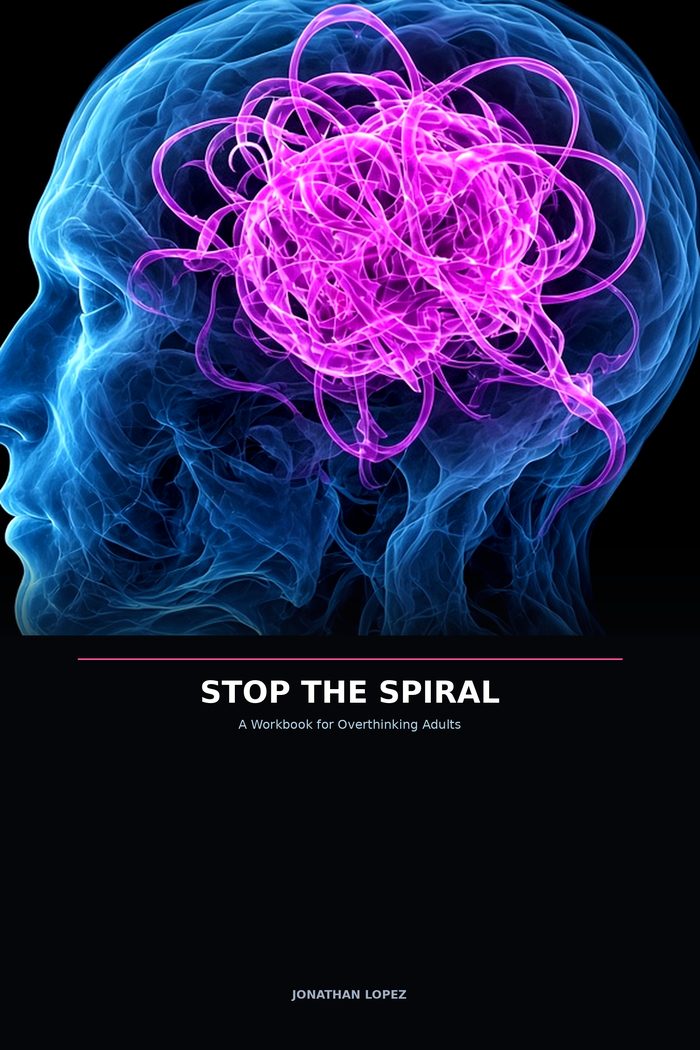
Stop the Spiral: A Workbook for Overthinking Adults expands these worksheet patterns with guided exercises for rumination loops, worry windows, and attention reset drills. Available on Kindle.
Disclaimer: Content on Trapped Mind is for education and self-practice only. It is not therapy, diagnosis, treatment, or legal advice. If you need professional support, please consult a licensed clinician. If you are in immediate danger, contact local emergency services.